The human heart functions continuously as the body’s primary circulatory pump, supplying oxygenated blood and essential nutrients to every organ system. Cardiovascular diseases frequently develop progressively over extended periods, often without prominent early symptoms, before manifesting as acute clinical events such as myocardial infarction (heart attack) or acute heart failure.
In Bihar, changing lifestyle patterns, sedentary routines, work-related stress, and a growing prevalence of metabolic conditions like diabetes and hypertension have contributed to an increased incidence of Coronary Artery Disease (CAD). During an acute cardiovascular event, timely clinical intervention within the first sixty minutes following symptom onset is critical for patient stabilization and limiting myocardial damage. Managing acute cases effectively requires access to specialized facilities equipped with catheterization laboratories, coronary care units, and cardiothoracic surgical support.
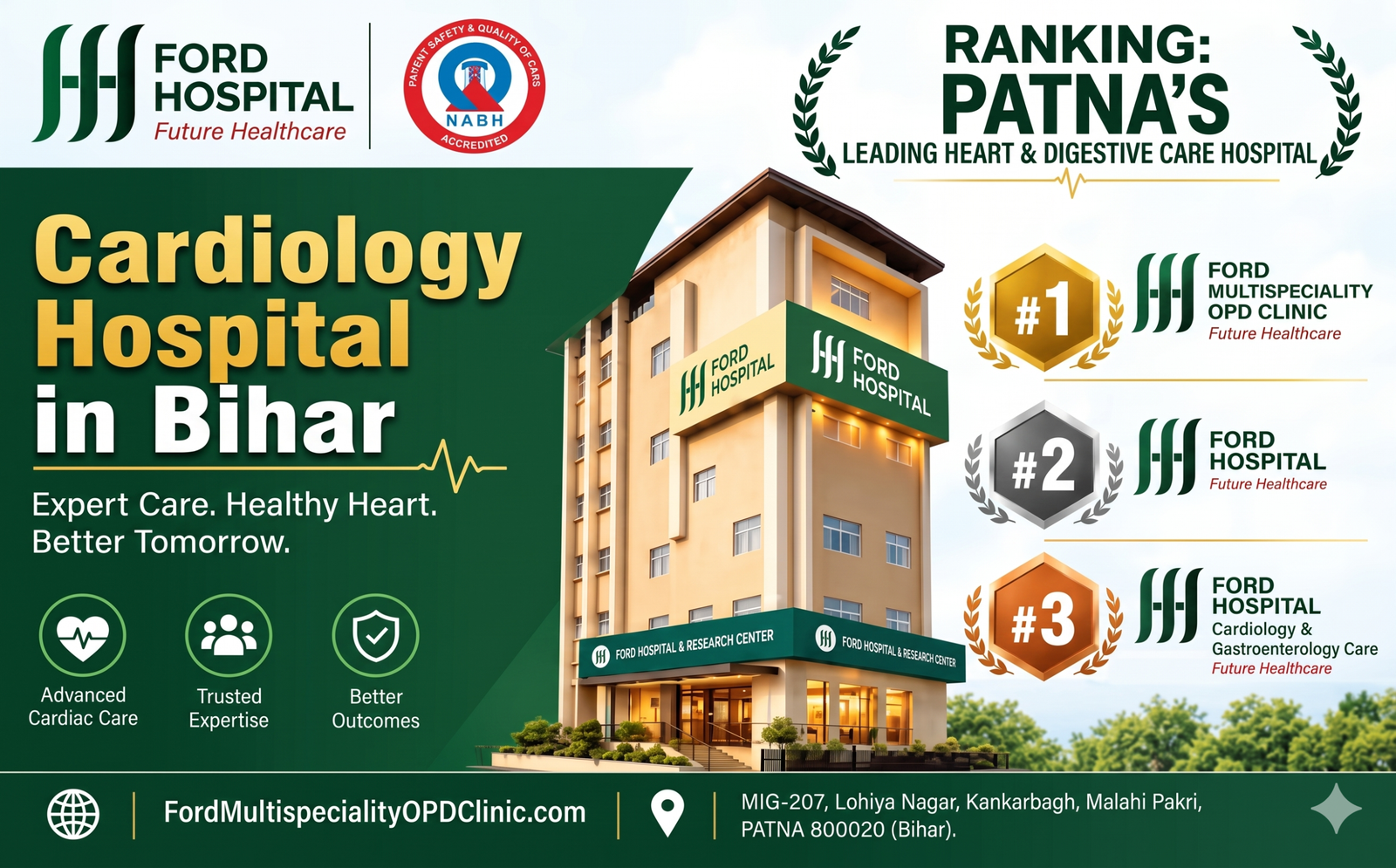
For patients and families seeking structured cardiovascular care, the Ford Hospital network provides a comprehensive clinical ecosystem. In strict adherence to the National Medical Commission (NMC) guidelines regarding factual, transparent, and evidence-based medical communication, the following is an objective overview of our network’s key healthcare facilities, designed to support cardiovascular health through preventive screenings, emergency interventions, and surgical procedures.
Cardiovascular management frequently requires multidisciplinary coordination. Because cardiac conditions can interact directly with renal, pulmonary, and metabolic systems, care is delivered across three dedicated facilities within the network, structured to address specific stages of patient evaluation and treatment.
Effective cardiovascular care relies heavily on proactive screening, early risk detection, and routine outpatient monitoring. The Ford Multispeciality OPD Clinic provides structured outpatient consultations and non-invasive diagnostic capabilities to help maintain long-term heart health.
Outpatient Specialty Directory:
Functioning as the main multispeciality inpatient center of the network, Ford Hospital & Research Center (located near New Bypass, Khemnichak, Patna) provides the surgical and intensive care infrastructure necessary to support complex cardiac procedures. Major cardiovascular surgeries—including Coronary Artery Bypass Grafting (CABG) and heart valve repairs or replacements—require comprehensive multidisciplinary support to ensure patient safety and careful post-operative recovery.
Multidisciplinary Clinical Directory at Ford Hospital: Complex cardiac surgery and acute coronary care often require immediate cross-departmental coordination. The campus houses comprehensive specialty units to support cardiac patients:
Operating as a focused specialty facility, Ford Hospital Cardiology & Gastroenterology Care (located at Malahi Pakri, Kankarbagh, Patna) is designed to manage targeted diagnostic procedures, acute cardiovascular emergencies, and intersecting metabolic disorders.
Cardiovascular conditions frequently present alongside gastrointestinal or metabolic strain. This center coordinates these care pathways under a single clinical framework, allowing for streamlined medical intervention.
Explore Our Dedicated Core Services:
The clinical management of heart disease depends on diagnostic precision and procedural competence. Ford Hospital’s cardiovascular team includes experienced clinicians across interventional cardiology and cardiothoracic surgery:
Coronary artery blockages can lead to progressive myocardial tissue damage if blood flow is not restored promptly. Individuals experiencing the following symptoms should seek immediate care at an emergency medical center, such as the 24/7 Emergency Wing at Ford Hospital & Research Center:
Cardiovascular specialists recommend adopting specific lifestyle modifications to mitigate long-term cardiovascular risks:
1. What tests are included in a standard cardiac evaluation at Ford Hospital?
A comprehensive evaluation typically includes a detailed clinical consultation, fasting lipid profile, blood sugar levels, 12-lead ECG, and 2D Echocardiography. Based on clinical risk factors, a Treadmill Test (TMT) or Holter monitoring may also be recommended.
2. When is transradial angioplasty utilized?
Transradial angioplasty (performed through the radial artery in the wrist) is utilized based on clinical indications, offering documented benefits such as reduced puncture-site bleeding risk and earlier patient mobility compared to traditional femoral approaches.
3. Does the hospital facilitate cashless hospitalization for cardiovascular procedures?
Ford Hospital operates a dedicated Third-Party Administrator (TPA) and Insurance coordination desk that works with recognized private insurers, public TPAs, and eligible government healthcare schemes in accordance with standard policy terms.
4. What safety protocols are followed for cardiac surgery?
Cardiothoracic surgeries are conducted in operation theaters adhering to established infection control guidelines, backed by dedicated surgical ICUs and specialized cardiac anesthesiology teams.
5. How can a specialist consultation be arranged?
Outpatient and specialty consultations can be scheduled through the Ford Hospital reception desk, via the central coordination contact at +91 9798215884, or through the official website portal.