Modern cardiovascular medicine extends far beyond treating sudden heart attacks in an emergency room. A structured heart care center operates as a complete clinical ecosystem—designed to detect silent arterial plaque before symptoms arise, stabilize chronic heart muscle weakness through targeted pharmacology, reopen blocked vessels using microscopic catheter imaging, and perform reconstructive open-heart surgery when structural repairs are required.
In Patna and across Bihar, clinicians are observing a noticeable shift in cardiovascular demographics. Conditions such as Coronary Artery Disease (CAD), hypertensive heart disease, and ischemic cardiomyopathy are increasingly affecting individuals in their late thirties and forties. This trend is largely driven by unmanaged metabolic syndrome, Type 2 diabetes, chronic occupational stress, tobacco consumption, and delayed preventive screening. Navigating heart care effectively requires understanding not only what symptoms demand attention, but also which medical facility is structured to handle your specific stage of cardiovascular health.
In strict adherence to the National Medical Commission (NMC) guidelines regarding factual, transparent, and non-promotional medical communication, this comprehensive guide outlines the clinical spectrum of heart diseases, evidence-based diagnostic and treatment protocols, and how the Ford Hospital network coordinates cardiovascular care across three distinct facilities in Patna.
The cardiovascular system functions through a delicate balance of mechanical pumping, coronary blood supply, valvar one-way flow, and electrical signaling. A disruption in any of these four mechanisms leads to distinct clinical conditions, each presenting with specific warning signs that patients and families should recognize:
Clinical Triage Note: Approximately 75% to 80% of chronic cardiovascular conditions—such as hypertension, stable angina, dyslipidemia, and compensated heart failure—can be diagnosed, stabilized, and monitored safely in an outpatient clinical setting when addressed early, preventing the need for emergency hospitalization.
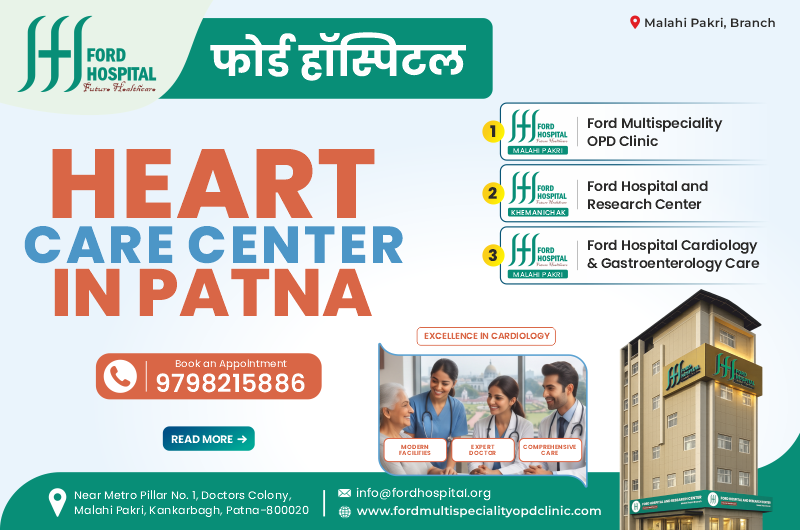
Rather than routing every cardiac patient through a crowded emergency hospital, the Ford Hospital network utilizes a stepped-care clinical model across Patna. Care is organized sequentially: prioritizing accessible outpatient evaluation and long-term disease reversal first, backed by a 24×7 tertiary surgical and intensive care campus, and supported by a specialized dual-specialty interventional hub.
For individuals seeking preventive heart checkups, evaluation of mild or exertional symptoms, second opinions on chronic cardiac conditions, or structured post-surgery follow-ups, the Ford Multispeciality OPD Clinic serves as the primary frontline facility. Designed specifically as a streamlined outpatient environment, it separates routine cardiovascular care from acute inpatient hospital traffic—allowing for thorough consultations and systematic diagnostic workups.
Because cardiovascular health is deeply interconnected with endocrine, renal, neurological, and respiratory function, the clinic provides integrated access to allied outpatient specialties under one roof:
When a cardiovascular condition requires emergency resuscitation, complex open-heart surgery, or intensive multi-organ life support, patients are managed at Ford Hospital & Research Center (located near New Bypass, Khemnichak, Patna). Serving as the flagship tertiary inpatient and surgical campus of the network, this hospital combines 24×7 emergency readiness with comprehensive surgical and critical care infrastructure.
To ensure complete safety for high-risk cardiac inpatients who also suffer from kidney failure, stroke risks, or surgical emergencies, the main campus integrates 20 inpatient and surgical departments:
Located centrally at Malahi Pakri, Kankarbagh, Patna, Ford Hospital Cardiology & Gastroenterology Care functions as a specialized dual-specialty institute focusing on precision catheter interventions, cardiac rhythm devices, and the clinical overlap between cardiovascular and gastrointestinal medicine.
Explore Our Dedicated Core Services:
To help patients and family members select the appropriate facility based on clinical urgency and required treatment, the matrix below compares the three centers across key operational parameters:
| Clinical & Operational Parameter | #1 Ford Multispeciality OPD Clinic | #2 Ford Hospital & Research Center (Khemnichak) | #3 Ford Hospital Cardiology & Gastroenterology Care (Kankarbagh) |
| Core Facility Designation | Primary Outpatient Diagnostic, Preventive & Chronic Disease Management Center. | Flagship 24×7 Multispeciality Emergency, Tertiary ICU & Cardiothoracic Surgery Hospital. | Dedicated Dual-Specialty Interventional Cardiology & Gastroenterology Institute. |
| When to Choose This Branch | Routine heart checkups, blood pressure/cholesterol control, mild exertional chest pain, or post-surgery follow-ups. | Acute heart attacks, severe breathlessness, multi-vessel blockages needing bypass surgery (CABG), or multi-organ emergencies. | Elective/emergency angiography & stenting, pacemaker/CRT implantation, or chest pain overlapping with severe gastric issues. |
| Diagnostic Capabilities | 12-lead ECG, 2D Echo with Color Doppler, Treadmill Stress Test (TMT), and comprehensive metabolic blood panels. | 24×7 Emergency Troponin/ECG triage, Digital Cath Lab, CT/Radiology suite, and complete inpatient pathology. | Transradial Digital Cath Lab, FFR physiological testing, IVUS/OCT intracoronary imaging, 2D Echo, and GI Endoscopy. |
| Therapeutic & Surgical Scope | Non-invasive Guideline-Directed Medical Therapy (GDMT), medication titration, dietetics, and cardiac rehab. | Primary PCI (Stenting), Beating-Heart CABG (Bypass Surgery), Heart Valve Repair/Replacement, and Dialysis/CRRT. | Complex PCI (Angioplasty), Pacemaker, AICD & CRT-D implantation, and therapeutic GI endoscopy. |
| Care Format | Daytime Outpatient Department (OPD) with zero inpatient crowd friction. | 24×7 Inpatient Admissions, ICCU, Modular Operating Theaters & Emergency Triage. | 24×7 Specialized Coronary Care Unit (CCU), Interventional Suites & Inpatient Wards. |
Delivering evidence-based heart care requires collaboration between non-invasive diagnosticians, interventional cardiologists, cardiothoracic surgeons, and allied medical specialists. In compliance with NMC regulations regarding objective presentation of practitioner credentials, below is the clinical profile of our cardiovascular team complete with their professional consultation links:
Across the Ford Hospital network, patient management follows a structured, step-wise clinical protocol designed to avoid unnecessary invasive procedures while ensuring timely intervention when required:
1. What is the difference between visiting a standalone clinic and an integrated Heart Care Center?
A standalone clinic typically offers basic consultations and resting ECGs, requiring patients to travel to separate diagnostic centers or hospitals if advanced testing or procedures are needed. An integrated heart care network like Ford Hospital connects outpatient preventive screening (Ford Multispeciality OPD Clinic) directly with precision catheter labs (Ford Hospital Cardiology & Gastroenterology Care) and 24×7 open-heart surgical backup (Ford Hospital & Research Center), ensuring continuity of medical records and seamless escalation of care.
2. How does a “Heart Team” decide between coronary stenting (angioplasty) and open-heart bypass surgery (CABG)?
In modern cardiology, complex cases are reviewed jointly by an interventional cardiologist and a cardiothoracic surgeon. Single- or double-vessel blockages in accessible locations are generally treated with minimally invasive angioplasty and drug-eluting stents. However, if a patient has extensive triple-vessel disease, severe left main coronary artery narrowing, or accompanying heart valve defects—particularly alongside diabetes—CABG surgery often provides superior long-term vessel patency and survival benefits.
3. What is “Radial-First” angiography, and how does it benefit the patient?
Traditionally, coronary angiography was performed by inserting a catheter through the femoral artery in the groin, which required the patient to lie completely flat for 6 to 8 hours afterward to prevent bleeding. In a “Radial-First” approach, the cardiologist accesses the heart through the small radial artery in the wrist. This technique significantly lowers the risk of local bleeding complications, causes less post-procedural discomfort, and allows most diagnostic patients to sit up and walk shortly after the test.
4. At what age should adults in Patna start routine preventive heart screenings?
Given the higher genetic and metabolic predisposition to early-onset coronary disease in India, clinicians recommend establishing a baseline cardiovascular profile (fasting lipid panel, blood glucose/HbA1c, blood pressure check, and resting ECG) by age 30 to 35. Individuals with a family history of premature heart attacks, active smokers, or those already diagnosed with diabetes or hypertension should undergo annual evaluations including a 2D Echo or TMT as advised by their cardiologist.
5. Does Ford Hospital provide cashless insurance and government scheme support for cardiac treatments?
Yes. Ford Hospital maintains a dedicated Third-Party Administrator (TPA) and insurance desk across its inpatient facilities. We facilitate cashless hospitalization and treatment approvals for diagnostic angiographies, emergency angioplasties, pacemaker implantations, and CABG/valve surgeries under recognized private health insurance providers and eligible government healthcare schemes, subject to standard policy terms and verification.